
Saying Goodbye to the London Marathon
At Trails and Vines we always like to present the fun side of running. This week though, I (Abby) will talk about one of the biggest struggles that, unless you are one of the super lucky ones, we all go through – injuries.
Injuries are a runner’s biggest fear – they stop us doing what we love, and for me it meant I had to give up on the dream I had always wanted to achieve since I first started on my running journey.
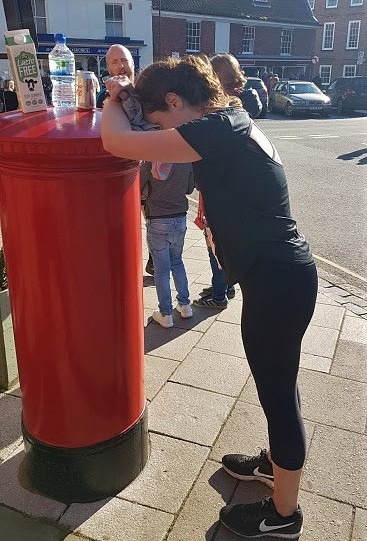
I admit it, there were tears – quite a few – when I decided to pull out of the London Marathon 2019. I know, there are far bigger things to be getting upset about, but after months of what had been great training, the reality of missing out on something I had wanted to do for years was devastating.
Nearly 3 months on I’m stronger than pre-injury (not yet fitter!) and at the early stages of training for the Porto Marathon in November, here’s the story and the lessons we can all learn from on that journey from injury to recovery.
9 weeks to Race Day, a bit of complacency and a bad decision to switch it up
My winter training had been going pretty great, I’d been running 30-35 miles a week and had several 16 mile runs under my belt so I was feeling pretty confident about getting close to the 4-hour mark I was aiming for.
Life was busy and as I began upping the millage, I unconsciously started cutting down on the time I was dedicating to strength sessions (bad decision number 1!). When I started to feel a niggle in my posterior tibial tendon (from your foot to the inside of your ankle) I decided to switch up some of my runs for spinning sessions, something I hadn’t done for around 5 years. I dived straight into an hour-long intense session of sprints and hill climbs (bad decision number 2!) which left me with very tight glutes.
After a few days off running my ankle felt good again, so when the sun was shinning (it was the week of the crazy heat wave we had in February) I took the opportunity to do a 16-miler which I enjoyed without problems, but I was conscious throughout of tightness in my right hip/glute. That afternoon I struggled to get up from the chair, how odd I thought, this hasn’t happened on the previous 16-milers, what’s going on?! A day off and a dog walk seemed to loosen it off, so with the fear of not wanting to miss any more sessions I headed out for my tempo run. Wooohooo, the first 3 miles were going great – no pain and I was hitting my target pace easily!
I spoke too soon as suddenly disaster struck; there was the most horrendous stabbing pain going through my right glute every time my foot hit the ground, which forced me to stop immediately. Hobbling along I tried to shake it out and break into a jog again, oh no, it didn’t like that! Crying through the pain (yes there were tears of actual pain here!) I rang Chris to come rescue me and aborted the rest of the run.
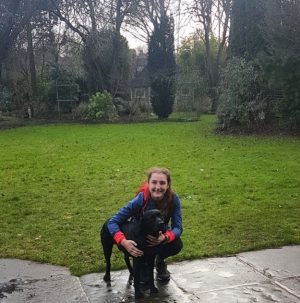
When training was going strong – loving life after a great 16-miler with my favourite running partner, Loki
Stage 1 – Denial
They say the first stage of grief is denial and it turns out it’s the first stage of injury recovery too!
It’s just a niggle I told myself, it’s nothing serious and there’s still 9 weeks to go until race day so I’ll be fine! In total denial, I gave myself a single day’s rest before attempting to run again (bad decision number 3) all the while gritting my teeth all through an agonising solitary mile. Just a bit more rest maybe??
Stage 2, 3 and 4 – Anger, Bargaining and Depression
Stages 2-4 were also very real but rolled into 1. I was so angry and disappointed with myself for getting injured, analysing everything I’d done wrong over the last few months. I was so frustrated and felt low not being able to run, it’s hard when something you love doing is taken away from you. So, I bargained with myself and forced myself out on 2 runs over the next 2 weeks, each lasted about 20 minutes and were agony from start to finish but I had a plan to stick to and needed to just do something!
Stage 5 Acceptance
After 3 weeks of near total rest and stretching, there had been next to no improvement so I finally accepted this was an injury that needed attention (I hadn’t yet given up hope of the Marathon). After a trip to the physio I realised I had seriously injured a tendon in my glute (lack of strengthening exercises as I upped the mileage, and an overloading of the tendons by suddenly introducing spinning into my routine).
With around 5 weeks to go, I reluctantly made the heart-breaking decision to say goodbye to the London Marathon 2019; whilst I could probably manage a walk-run on the day I knew it would jeopardise our holidays. The marathon was right in the middle of our holiday season, and I couldn’t afford to make the injury worse when I’d be hosting guests in Rioja and Bordeaux. Whilst I was totally gutted I felt a weight had been lifted, it now felt manageable – I would focus on recovering and building strength for our holidays and vowed to never neglect strengthening again!!
First Steps for Recovery
After I had finally accepted I was injured I was ready to embark on rehabilitation – lots of strengthening, stretching, resting and icing the problem area.
I stretched and mobilised my hips/glutes every day and ensured I was doing a strength session at least 3 times a week, targeting my glutes and my core – the problem areas! By strengthening my glutes and core I was building the supporting muscles around my tendons and relieving the pressure. Chris also made me do a few ice baths, I can’t prove that these worked but it definitely made me feel better afterwards, even if I spent nearly every second of the 6 minutes in there asking how long I had left!
Next, alongside the strengthening, I started to build the running back up with very low mileage (2-3 miles at a time) often with a walk-run strategy. I found up-hill running was great for me – it strengthened my glutes, improved my form and was much less painful than flat or downhill running (downhill was impossible for weeks!).
At the beginning of April I came back from a 30 minute run around the vineyards in Bordeaux ecstatic – I’d managed to run for a whole 30 minutes without pain!! The feeling was amazing.
April saw continued progress; at times I was stiff and sore, but I was getting stronger and building up slowly. And the best bit was that I was able to enjoy running with our wonderful guests – a massive relief!!
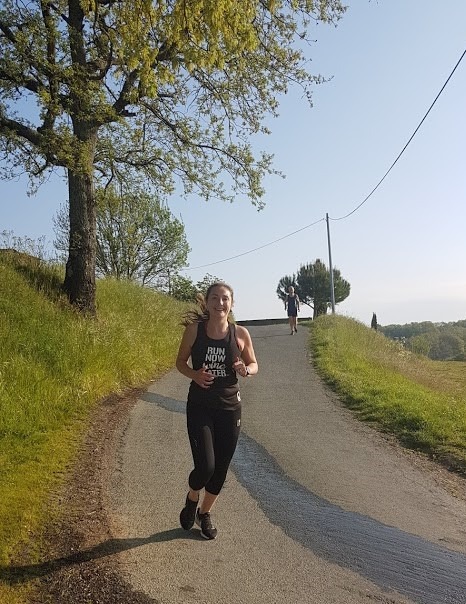
Finally enjoying a hill session in Bordeaux mid-April with our guests!!
Staying Injury Free
It’s now been over 3 months since the injury, progress has been slow but steady. I’ve been running pain free for about a month now and I’m determined to keep it that way! My fitness isn’t quite where it was – I tested myself at Parkrun last weekend and I’m a minute slower than pre-injury, but an awful lot quicker than I was when I was hobbling along 3 months ago so I’m sure I’ll be in PB territory again before long!
Whilst it has been an agonising period for me, it is definitely one where I have learned a lot. Injuries can happen anytime and to anyone, therefore I’ve popped in a few things below that can hopefully help you to avoid making the same mistakes as me.
Here’s my top tips for staying injury free:
Strengthening sessions are as important as your running sessions!
I do a form of strengthening every day even if it’s a quick 10 minutes before the shower. Here’s a great routine you can try from Runner’s World
Rest is part of your training plan
It cannot be overstated how important rest is for allowing your body to absorb the benefits of the training sessions you are doing. Make sure rest forms a part of your training plan – both through days off and by incorporating an easier week at least every 4 weeks.
Think about the FIT factors – Frequency, Intensity, Time.
Only increase one of these elements in your plan each week to avoid too much overload
Hills are your friend
You either love them or hate them, but as a previous hater they are my new best friend. I now incorporate a hill session once a week in my plan as it is the best all round session for improving technique, strengthening key muscles and getting fitter faster. If you’re not confident in your downhill running, run up, walk down!
Don’t go adding in crazy new exercises classes during key training cycles.
In hindsight the intense spin class for the 1st time in 5 years so close to the marathon and in the middle of a 30-mile week was a mistake!
Don’t “run through” pain
Stop if the pain is too much and definitely stop if the pain worsens as you run, it’s time to get help.
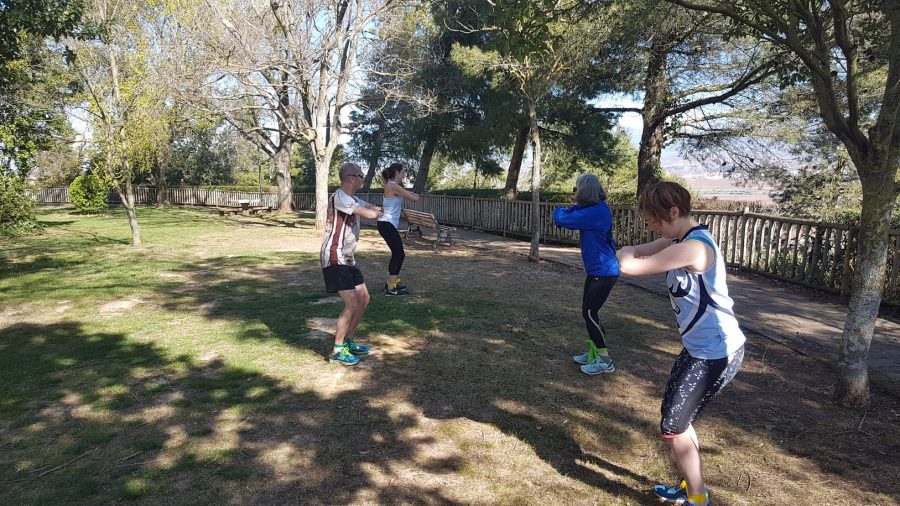
Strength session with some of our guests in Rioja – a vital part of recovery and preventing injuries!